
A smarter way to run parking operations
The hidden cost of dependancy in modern parking systems
Running parking operations today often means coordinating multiple systems, providers and processes. When something happens, you depend on someone else. For many operators, this is simply how things work. But as parking operations become more digital and more complex, a new question is emerging: “Do you actually need to run your operations this way?”
This setup leads to:
Multiple systems that do not fully communicate
Limited visibility across locations
Manual work to handle exceptions and customer cases
Delays when changes need to be made
Over time, this becomes the norm. But it also creates friction, inefficiencies and unnecessary dependency.
The hidden cost of dependency
Relying on external partners can feel efficient, but it often comes with hidden costs. Response times depend on someone else’s availability. Costs add up. Charges take longer. Scaling becomes more complex.
And perhaps most importantly, you are not fully in control of your own parking operations.
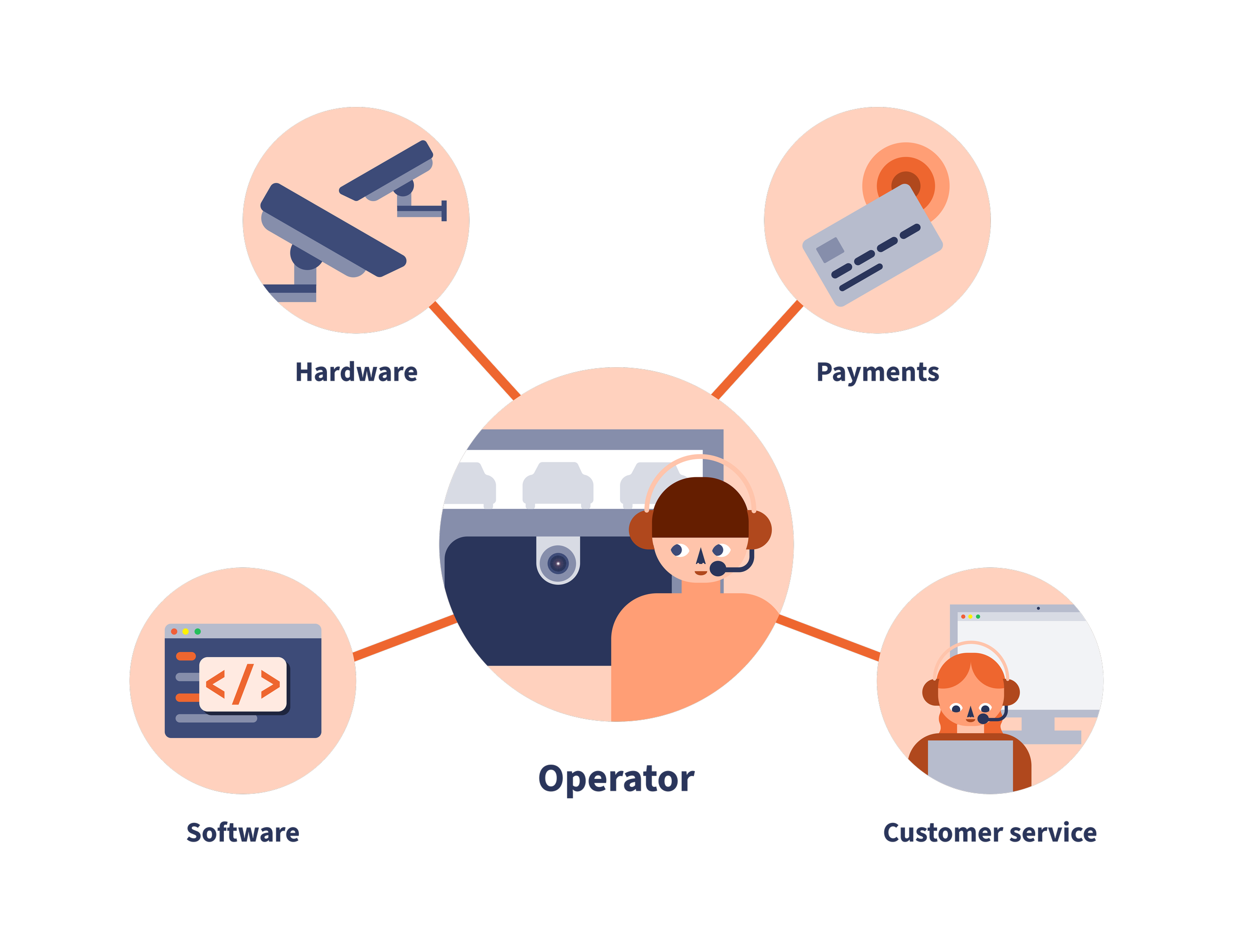
Over time, parking operations have evolved into a mix of specialised providers, each responsible for different parts of the operation:
Hardware
Software
Payments
Customer service
Each plays an important role. But together, they create a fragmented system where simple tasks require coordination across multiple parties.
What if you could handle more yourself?
With a modern parking management system, many daily tasks can be automated and handled internally - quickly and without technical complexity.
Managing sessions and payments
Handling exceptions
Adjusting pricing, settings and rules
Gaining real-time visibility across locations
This is not about turning operators into technicians. It is about reducing manual work and giving operators the ability to act without always depending on someone else.
From dependency to control
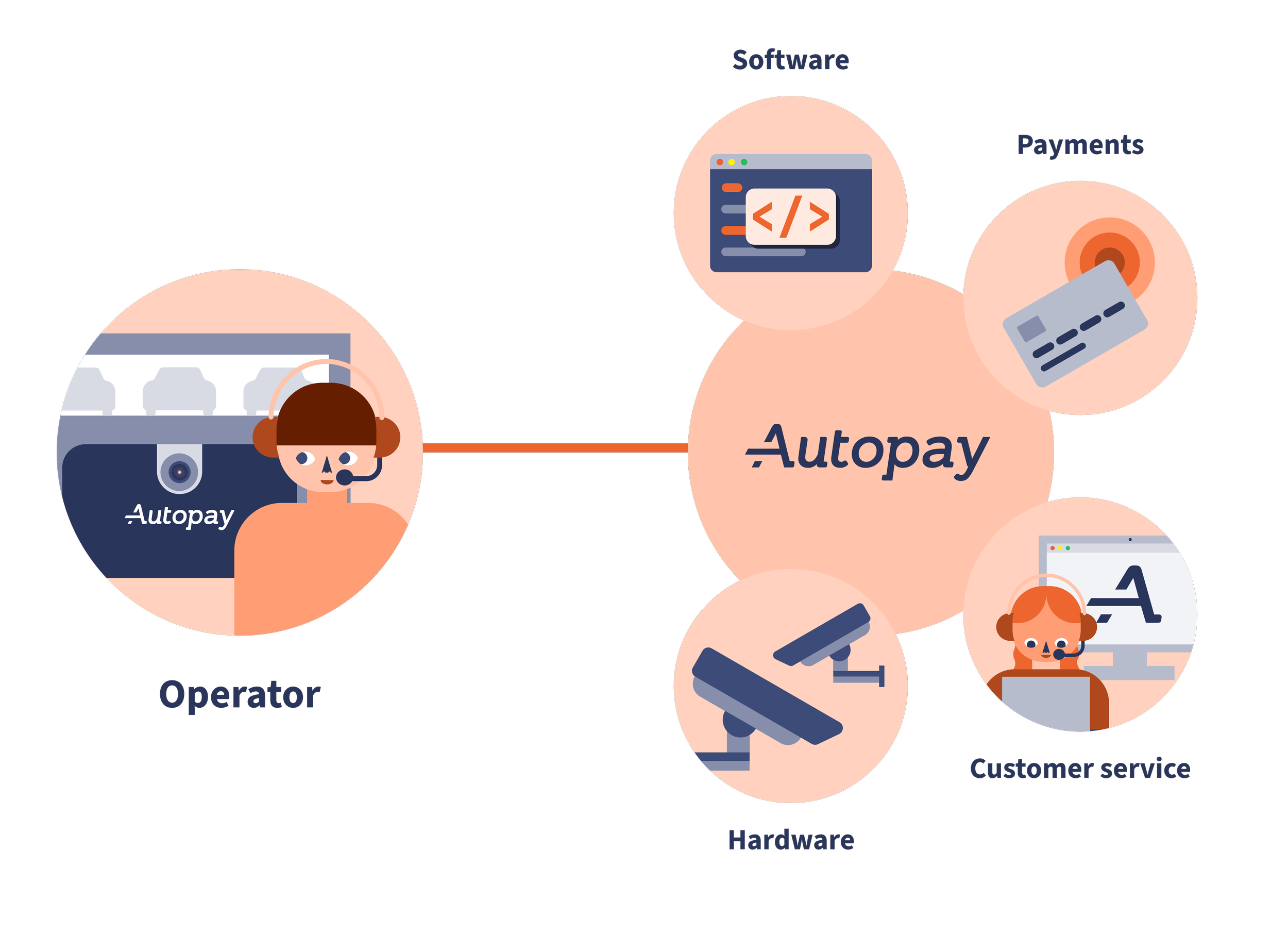
As part of the digital transformation in the parking industry, more operators are moving towards platform-based parking management software.
This approach gives operators:
Greater flexibility in choosing hardware
Control over how payments are handled
Freedom to manage customer interactions their own way
The ability to adapt the system to their workflows and brand
The result is not necessarily doing everything yourself. The result is having the freedom to choose.
Built for operators, not technicians
At Autopay, this shift has been a key principle from the start.
We do not sell hardware.
We do not take a share of your revenue.
We do not require you to outsource your customer operations.
Autopay provides a cloud-based parking platform designed to be used by operators themselves. A system that is:
Easy to manage in day-to-day parking operations
Flexible across industries and use cases
Open to integrations and third-party services when needed
In practice, this means that tasks that once required a phone call can now be handled in seconds through a single parking operations platform.
And because the system adapts to your setup, it becomes an extension of your business, not a standardised solution shared with others.
Want to see what that looks like for your setup? Get in touch for a no-obligation walkthrough.
Less dependency. More control.
Moving towards a more self-managed setup does not happen all at once. Its a gradual shift, not a comlete change overnight.

You can still work with partners, but without being dependent on them to run your own operations.
The question is not if, but when. As parking operations become more digital, expectations are changing:
Faster response times.
Better customer experiences.
More efficient operations.
Meeting these expectations with a fragmented, fully outsourced setup becomes increasingly difficult. Which is why more operators are starting to ask: “What would our operations look like if we were truly in control?”
Taking control of your parking operations does not mean doing everything yourself. It means having the ability to act, adapt and make decisions on your own terms - while staying competitive.
Explore more
If you want to better understand the technology enabling this shift, these articles are a good place to start:
What is ANPR and how does it work in modern parking systems?
What to consider when choosing an ANPR-based parking management system?
Single-camera vs dual-camera ANPR systems: What is the difference in practice?
Whether you are reviewing your current setup or exploring new ways of operating, we are happy to share insights and discuss what a more flexible approach could look like for you.
